

Eco-Friendly Fabrics:
Certified Sustainable Materials
& Responsible Production
All my fabrics are printed in the north of Spain using water-based inks that are OEKO-TEX™ certified. In addition, some of my fabrics are made from recycled materials, helping protect the environment and promote sustainable practices in the textile industry. These fabrics are GRS (Global Recycle Standard) certified, ensuring they meet international sustainability and social responsibility standards. I also use organic cotton fabrics with GOTS – ORGANIC CU1016503 certification, which guarantees their sustainability and eco-friendliness. Organic fabrics help reduce the environmental impact of production and encourage the responsible use of natural resources and chemicals. Additionally, when making the accessories, I work with the fabric in a way that maximizes its use, ensuring almost no waste is produced and minimizing textile waste.

Innovative Jewellery:
Nopal Cactus Leather
& Recycled Silver
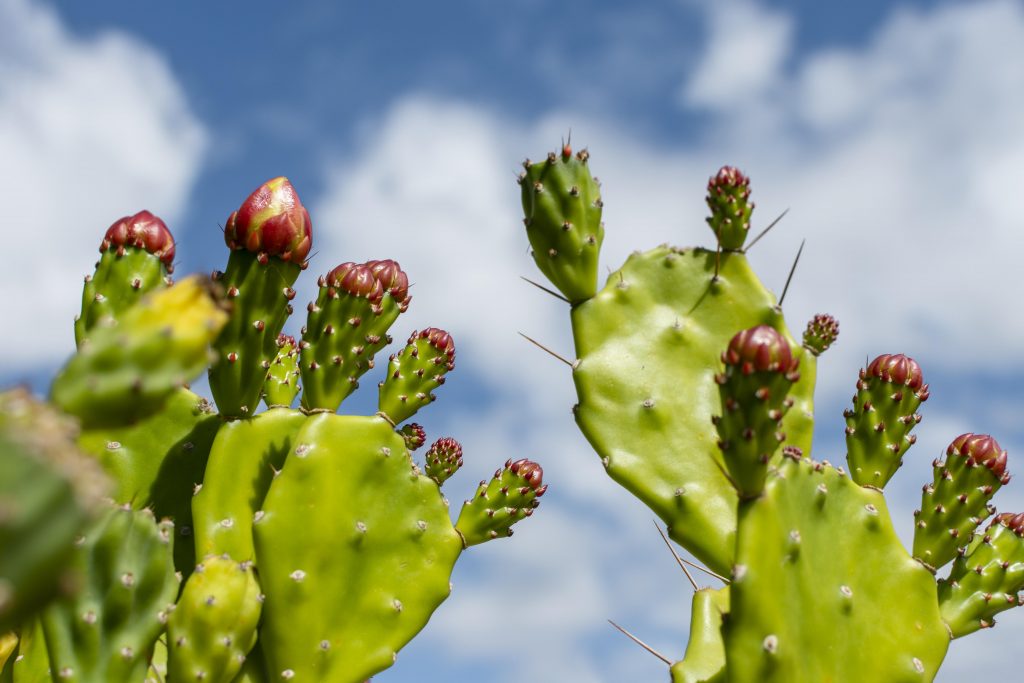
On the other hand, due to the exploration of new sustainable and innovative materials, I also offer a line of jewellery made from recycled silver and hand-painted leather. The uniqueness of this leather is that it is neither animal skin nor plastic faux leather. Instead, it is a plant-based leather made from nopal cactus, completely cruelty-free and vegan.
Nopal is capable of growing in areas where other crops do not thrive and can be used for the restoration of degraded lands in many countries. The cultivation of nopal originated in Mexico, which remains the world’s leading producer and consumer.
This innovative material is not only highly sustainable but also environmentally friendly. The cultivation methods for this type of leather are based on responsibility and sustainability:
- Only mature leaves are carefully selected and harvested every 6-8 months, ensuring minimal impact on the cactus.
- The cactus thrives on rainwater and locally abundant minerals, without the need for an irrigation system.
- The chosen cactus species is resilient and withstands low temperatures without compromising its health.
Cactus planting is perennial, lasting around 8 years. It has an efficient water-use metabolism, absorbing CO2 at night and minimizing water consumption through its natural hygroscopic mechanism.
The agricultural practices for its production promote biodiversity, preserving native flora and providing habitat for wildlife. No trees are cut down, and the entirely organic cultivation stimulates the micro-flora and micro-fauna of the soil without using herbicides or pesticides. The leaves are naturally dried, without additional energy.
Additionally, the cactus acts as a natural carbon sink, capable of capturing a considerable amount of CO2. Increasing nopal plantations can be a strategy to alleviate CO2 accumulation in the atmosphere. They can be used as water and carbon reservoirs in arid and semi-arid regions where the climate is erratic.